University of Nebraska Press, 2018
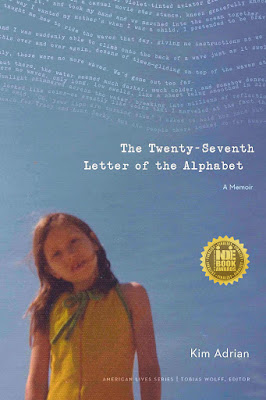
An intimate portrait of the chaos and confusion of a mother's mental illness and a deep meditation on storytelling itself, The Twenty-Seventh Letter of the Alphabet chronicles a daughter's struggle to face the Medusa of generational trauma without turning to stone. In this uniquely structured memoir, Kim Adrian tries to make peace with a troubled childhood by cataloguing memories, anecdotes, and bits of family lore in the form of a glossary. But within this strategic reckoning of the past, the unruly present carves an unpredictable path as Adrian’s aging mother plunges into ever-deeper realms of drug-fueled paranoia. Ultimately, the imposed order of the glossary serves less to organize emotional chaos than to illuminate the painful reality of loving someone you cannot save.A Next Generation Indie Book Awards Finalist
Poets & Writers New & Noteworthy Read
Poets & Writers New & Noteworthy Read
- PRAISE -
“This ambitious memoir glints with poetry and wisdom. . . . Aching, endless, unresolved, and extremely compelling.” —The Los Angeles Review of Books
“An intimate and searching accumulation of the moments, tender and brutal, that heap together and create a life.”
—The Boston Globe
“Astonishing and inventive. . . . Strangely gripping, with a momentum pulling the reader in and through. The result is whimsical, even darkly funny at times, brimming with compassion, terribly sad and deeply loving. Memoir readers should not miss this singular offering.”
—Shelf Awareness
“An unconventional, wildly disturbing, and hugely innovative book.”
—The Florida Review
“Adrian’s unique approach to narrating a story that resists order is to transform it into glossary entries. . . . Some of the entries are long and provide pages of narrative, others are brief like a punch.”
—Signature Reads
“Adrian uses a highly unconventional form to mirror her confusion over how to connect her wide-ranging, frequently painful memories of what she and her sister endured . . . creating deep connections between the reader and her childhood self.”
—Hippocampus
“A remarkable rendering of a mother-daughter relationship . . . At turns hilarious, repulsive, poetic, and devastating.”
—Propeller Books
“A stunning merger of form and content; a remarkable portrait-becomes-self-portrait.”
—David Shields, author of Reality Hunger
- PURCHASE -